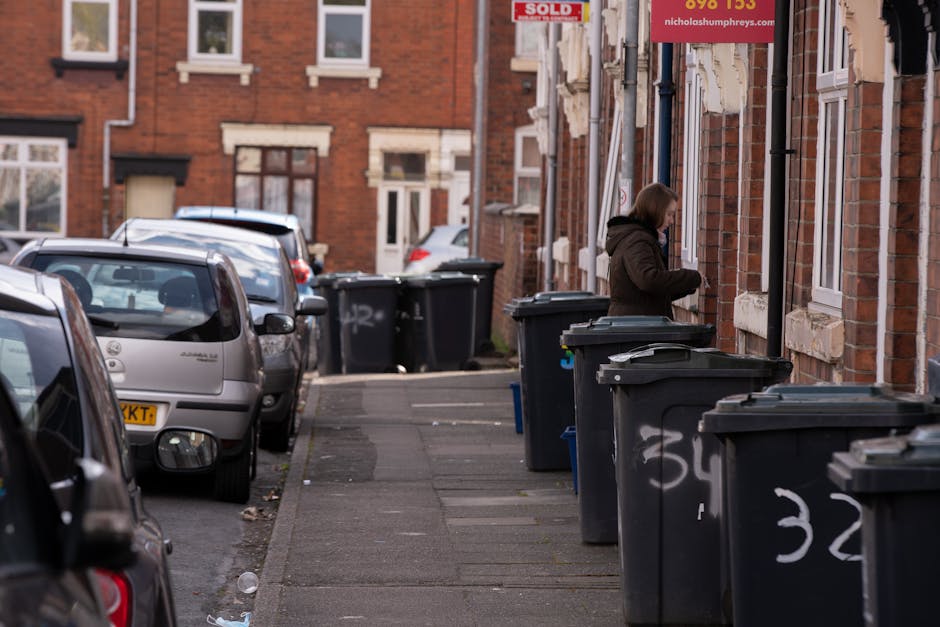
Abbey Road rubbish removal guide for St Johns Wood

If you live, work, or are clearing a property near Abbey Road in St Johns Wood, rubbish removal can feel simple on the surface and oddly complicated once you start. Bags stack up, bulky items get in the way, stairwells narrow, parking becomes a nuisance, and suddenly the whole job takes longer than it should. This Abbey Road rubbish removal guide for St Johns Wood is here to make the process clearer, calmer, and much more manageable.
Whether you are shifting old furniture, clearing a flat after tenants have moved out, dealing with builders' waste, or just getting on top of a room that has become a bit too full, the right approach saves time and avoids stress. It also helps you choose between a one-off collection, a broader clearance service, or a more specific option such as flat clearance, furniture disposal, or general waste removal.
Truth be told, most rubbish removal jobs are not difficult because of the rubbish itself. They are difficult because of access, timing, sorting, and knowing what can legally and safely be taken away. Let's break it down properly.
Table of Contents
- Why Abbey Road rubbish removal guide for St Johns Wood matters
- How Abbey Road rubbish removal guide for St Johns Wood works
- Key benefits and practical advantages
- Who this is for and when it makes sense
- Step-by-step guidance
- Expert tips for better results
- Common mistakes to avoid
- Tools, resources and recommendations
- Law, compliance, standards, or best practice
- Options, methods, or comparison table
- Case study or real-world example
- Practical checklist
- Conclusion
- Frequently asked questions
Why Abbey Road rubbish removal guide for St Johns Wood matters
Abbey Road is one of those London locations where the setting itself shapes the job. You often have a mix of residential flats, period buildings, shared entrances, narrow streets, busy foot traffic, and limited stopping space. That means rubbish removal is rarely just a case of "load it and leave". It needs a bit of planning.
In St Johns Wood, people also tend to be balancing busy routines. School runs, work calls, live-in households, rental turnovers, and renovation schedules all pile on at once. A messy clearance can throw the whole week off. A well-planned one, on the other hand, can feel oddly satisfying. The difference is usually in the preparation.
This matters for another reason too: mixed waste often includes items that should not be treated the same way. A broken wardrobe is not the same as a bag of general household rubbish. A fridge is not the same as a mattress. And builders' rubble is not the same as old office paper. If you choose the wrong disposal route, you can end up with delays, extra charges, or a collection that refuses part of the load. Not ideal.
Expert summary: The best rubbish removal outcome in Abbey Road is usually not the fastest booking; it is the one that matches access, waste type, and collection method to the property properly from the start.
For residents who want a straightforward solution, services like home clearance or house clearance often fit better than a generic "one-size-fits-all" approach. Same goes for office or business premises, where office clearance or business waste removal can be the cleaner route.
How Abbey Road rubbish removal guide for St Johns Wood works
At a practical level, rubbish removal starts with identifying what needs to go, then matching that waste to the most efficient method. That sounds obvious, but it is where many jobs go sideways. People often begin by dragging things into the hallway or piling them outside, only to realise later that some items need separate handling.
Most collections follow a simple pattern:
- Identify the waste type - general rubbish, furniture, appliances, garden waste, construction debris, or specialist items.
- Estimate the volume - a few bags, a van load, or a larger mixed clearance.
- Check access - stairs, lifts, parking, distance from the property, and whether items can be carried safely.
- Choose the right service - for example, mattress and sofa disposal for soft furnishings, or fridge and appliance removal for white goods.
- Book a collection - ideally with clear details about what is being removed and where it is located.
- Sort and load - a good team will separate items for reuse, recycling, and responsible disposal where possible.
In some cases, a skip might be suitable, especially for renovation work. But if the load is awkward, heavy, or spread across several rooms, a clearance team may be the easier option. If you want to compare what can go into a skip, it helps to review what can go in a skip before deciding.
One small but important point: "rubbish removal" is not always the same as "man and van with a tip run". A proper clearance service usually includes loading, lifting, sorting, and disposal planning. That can save a lot of back strain. And yes, your lower back will thank you the next morning.
Key benefits and practical advantages
The real benefit of organised rubbish removal is not just a clean floor. It is the way it changes the whole pace of a project. A room feels bigger. A move feels less frantic. A renovation becomes easier to manage. You stop stepping around old chairs and broken packaging. Small thing, big difference.
Here are the advantages people in Abbey Road and St Johns Wood usually notice first:
- Less disruption - items are removed in one planned visit rather than many awkward trips.
- Better access management - especially important in flats, shared buildings, and narrow stairways.
- Safer handling - heavy or sharp items are moved by people who know how to do it properly.
- More appropriate disposal - useful for separating recyclable material from general waste.
- Faster turnaround - particularly helpful for end-of-tenancy, sales, or refurbishment deadlines.
- Less guesswork - the right service reduces the risk of booking the wrong type of collection.
There is also a quieter benefit: peace of mind. If you know items are being handled in line with normal UK waste expectations and not simply dumped somewhere questionable, it removes a layer of anxiety many people do not even realise they have until it is gone.
For homes with multiple item types, you can often combine services. For example, a property clearance may include furniture, appliance items, and assorted household waste, while a separate loft or garage job might need a more targeted approach such as loft clearance or garage clearance. That flexibility matters.
Who this is for and when it makes sense
Not everyone needs a full clearance. Sometimes a few black sacks and a recycled donation run will do the job. But Abbey Road rubbish removal becomes genuinely useful when the waste is too bulky, too mixed, or too time-sensitive for a DIY approach.
This guide is especially relevant if you are:
- moving out of a flat or house in St Johns Wood
- preparing a rental property for new tenants
- clearing clutter after years of accumulation
- renovating a kitchen, bathroom, or entire property
- disposing of old furniture, white goods, or mattresses
- clearing an office, studio, or small business space
- sorting post-build waste after a refurbishment
A realistic example: imagine a top-floor flat near Abbey Road with two wardrobes, an old sofa, a mattress, and several bags of mixed clutter. You could spend a whole weekend arranging transport, carrying items down stairs, and making separate disposal decisions. Or you could schedule a single, coordinated collection and move on with your life. To be fair, most people choose the second option once they see the difference.
If the waste is mostly furniture, a targeted service such as furniture clearance or furniture disposal may be the neatest fit. If it is more general clutter, waste removal is often the broadest starting point.
Step-by-step guidance
Here is a straightforward way to tackle rubbish removal without making it harder than it needs to be.
- Walk through the property slowly. Do not just grab the obvious items. Check cupboards, under beds, loft spaces, balconies, sheds, and storage corners. You will usually find one extra "oh, I forgot that" pile. Happens every time.
- Separate by category. Keep furniture, appliances, general waste, recyclables, and anything questionable apart from one another. If you know you have a fridge, keep that noted separately.
- Measure the awkward items. Large sofas, wardrobes, or desks may need to be dismantled or moved in sections. If you are unsure, note the dimensions before booking.
- Check access and parking. Is there a lift? Is the item on the third floor? Can the vehicle stop nearby? These details affect timing and price more than people expect.
- Flag anything special. Paint, chemicals, fluorescent tubes, or damaged electricals need careful handling. Do not tuck them in with general rubbish and hope for the best.
- Choose the right collection type. A full property job may need flat clearance, while renovation debris may be better handled via builders' waste clearance.
- Confirm payment and booking details. Check what is included, when the team arrives, and whether labour, loading, or disposal are part of the quote.
- Prepare the area. Keep doors open if appropriate, move valuables aside, and make sure shared areas are clear. Little things save time.
As a rule, the cleaner the information you give upfront, the smoother the removal day will be. That sounds boring, yes. But it works.
Expert tips for better results
If you want a removal to feel smooth rather than scrappy, a few small habits make a big difference.
- Take photos before booking. Even a quick set of phone photos can help confirm volumes and item types.
- Label mixed piles. A simple note like "keep", "recycle", "remove", or "check first" can prevent confusion during a busy clearance.
- Leave a clear route. Hallways, front doors, and stairwells should be as open as possible. It is not glamorous, but it matters.
- Think about reuse first. Some furniture may be better suited to reuse or donation than disposal, depending on condition.
- Ask about recycling practice. A responsible provider should be able to explain how they manage recyclable materials and residual waste.
- Plan around neighbours. In shared buildings, a little consideration goes a long way. Quiet hours, lift use, and common areas matter.
If you are dealing with a particularly bulky item, such as a broken wardrobe or a sofa that barely fits down the stairwell, dismantling it first can simplify the job dramatically. Not always necessary, but often worthwhile. The sound of a screwdriver and a bit of patience can save a lot of hassle later.
And one more thing: be honest about the waste. If the job includes more than you first thought, say so early. It avoids awkward surprises on the day, and everyone appreciates that. Really.
Common mistakes to avoid
Most rubbish removal problems come from a handful of predictable mistakes. None of them are dramatic on their own. Together, they can be annoying enough to blow out your timing or budget.
- Underestimating the volume. What looks like "a few bags" can become a van-full once sorted properly.
- Mixing special waste into general waste. Appliances, chemicals, and certain construction materials need different treatment.
- Not checking access. A great quote can become less great if the team cannot park close or has to carry everything a long way.
- Leaving items scattered everywhere. This slows loading and can increase labour time.
- Ignoring building rules. Shared flats sometimes have rules about loading bays, lift booking, or noise. Not fun to discover at the last minute.
- Choosing the wrong service. A general waste job may not be the best fit if the main load is furniture, white goods, or renovation debris.
One of the sneakiest mistakes is assuming all waste can be handled in the same way. It cannot. A mattress, a refrigerator, and a pile of broken plaster all have different handling expectations. That is why matching the service to the material matters so much.
Tools, resources and recommendations
You do not need a huge toolkit to organise rubbish removal, but a few simple items make the job easier and safer.
- Strong refuse sacks or rubble sacks for sorted waste
- Marker pens and labels for identifying what stays and what goes
- Work gloves for sharp edges, dust, and rough materials
- Basic screwdriver or drill for dismantling furniture where needed
- Tape measure for checking large item dimensions before collection
- Phone camera to document access points, waste piles, and any awkward items
From a service perspective, it is worth reviewing the practical pages on pricing and quotes and book online if you are trying to arrange a collection quickly. If sustainability is a priority, the page on recycling and sustainability is also useful to understand how material separation and responsible disposal are approached.
For electricals and kitchen appliances, use fridge and appliance removal rather than trying to force them into a standard general waste plan. It is just cleaner, simpler, and safer.
Law, compliance, standards, or best practice
Rubbish removal in the UK sits within normal waste-handling expectations, so it is sensible to treat it with care rather than as an afterthought. You do not need to become a waste law expert, but you should make sure waste is handed to a provider that uses proper handling, loading, transport, and disposal practices.
Best practice usually includes:
- separating recyclable material where practical
- handling hazardous or specialist waste separately
- avoiding fly-tipping or informal dumping routes
- using safe lifting methods for heavy items
- keeping clear records and agreed terms for the collection
If you are clearing confidential paperwork from a home office or business premises, a dedicated service such as confidential shredding is the sensible route rather than binning documents loosely. For anything potentially dangerous, including certain liquids or materials from repairs and renovation work, hazardous waste disposal should be treated as a separate conversation.
It is also worth checking practical trust signals when choosing a provider. Pages like insurance and safety, health and safety policy, and payment and security can help reassure you that the service is set up properly. That reassurance matters more than people think.
Options, methods, or comparison table
There is no single "best" rubbish removal method. The right choice depends on what you are clearing, how quickly it needs to happen, and how much lifting or sorting is involved.
| Method | Best for | Strengths | Watch-outs |
|---|---|---|---|
| General waste removal | Mixed household clutter and bagged rubbish | Flexible, convenient, good for varied loads | May not suit specialist or heavy construction waste |
| Flat clearance | Whole flats or substantial room-by-room clearances | Efficient for end-of-tenancy or large resets | Needs clearer planning and access details |
| Furniture clearance | Sofas, tables, wardrobes, chairs | Good for bulky items, less faff than DIY lifting | Some items may need dismantling |
| Builders' waste clearance | Renovation debris, plaster, timber, packaging | Matches construction-related waste more closely | Must avoid mixing with prohibited materials |
| Skip-based disposal | Large, ongoing project waste | Useful for repeated loading over time | Needs space, planning, and an understanding of what can go in a skip |
For many Abbey Road properties, the winner is a mixed approach: a main clearance for bulky items, then a smaller follow-up for leftovers. That sounds inconvenient, but sometimes it is actually the cleanest way to finish the job properly.
Case study or real-world example
Here is a realistic example from the kind of situation people often face in St Johns Wood.
A resident in a second-floor flat near Abbey Road needed to clear out a spare room before a new tenant moved in. The room held an old bed frame, a mattress, two office chairs, several boxes of books, and a jumble of household items that had quietly multiplied over the years. Nothing exotic. Just enough to make the room unusable.
At first, the plan was to move everything downstairs over a weekend. After carrying one chair to the landing and hearing it scrape against the wall, the job was quickly rethought. Sensible decision, honestly. The better route was to separate the soft furnishings, note the heavier items, and book a clearance that could handle the lifting and disposal in one visit.
The practical payoff was simple: the room was cleared without damaging the communal staircase, the tenant move-in stayed on schedule, and the resident did not spend Sunday arguing with a bed frame. That last part alone was worth it.
What this example shows is that the smartest rubbish removal plan is often the one that respects the property, the schedule, and the building layout. Not the one that tries to brute-force everything.
Practical checklist
Use this before booking or collection day.
- List every item that needs removing
- Separate general rubbish from furniture, appliances, and specialist waste
- Take quick photos of bulky or awkward items
- Measure large items and check if they need dismantling
- Confirm lift access, stairs, and parking details
- Check whether the building has loading or timing restrictions
- Review whether you need a targeted service such as flat, office, loft, or garage clearance
- Ask about recycling, disposal, and any excluded items
- Keep hallways, doorways, and access routes clear
- Make sure payment terms and booking details are understood
If you are also dealing with storage overflow or garden overflow, related services such as garden clearance or home clearance can save you from trying to split one job into too many tiny tasks. Sometimes that is the difference between feeling on top of things and feeling buried by them.
Get a free quote today and see how much you can save.
Conclusion
Abbey Road rubbish removal in St Johns Wood works best when it is planned around the property, the waste type, and the way the building actually functions. That means thinking beyond the obvious pile of stuff and considering access, sorting, disposal, and safety from the beginning. Do that, and the job usually becomes far less stressful.
The main takeaway is straightforward: choose the right service for the load, prepare the space properly, and use a provider that handles waste responsibly. It sounds simple because, in the end, it should be simple. The details are what make it work.
If you are staring at a room full of clutter right now, take a breath. Start with one corner, one category, one decision. The rest tends to follow.
Frequently Asked Questions
What is the best rubbish removal option for a flat near Abbey Road?
For most flats, the best option is usually one that includes lifting, loading, and disposal in a single visit. If you have a full flat to clear, flat clearance is often more practical than trying to move everything yourself.
Can I book rubbish removal for just a few bulky items?
Yes. Many people only need a few items taken away, such as a sofa, mattress, or old wardrobes. A targeted service like mattress and sofa disposal or furniture disposal can be the neatest solution.
How do I know whether I need builders' waste clearance or general waste removal?
If the rubbish mainly comes from refurbishment or renovation work, builders' waste clearance is usually more suitable. If the load is a mix of household items, packaging, and general clutter, general waste removal may be the better fit.
What should I do with an old fridge or freezer?
Fridges and freezers should be handled as appliance items rather than mixed into ordinary waste. Use fridge and appliance removal so the item is collected and processed appropriately.
Is it better to use a skip or a clearance service?
It depends on your access, the amount of waste, and how hands-on you want to be. A skip can suit ongoing project waste, while a clearance service is often easier for bulky items, stairs, or mixed loads. If you are unsure, review what can go in a skip before deciding.
Can rubbish removal help with a house move or tenancy change?
Absolutely. It is one of the most common reasons people book a clearance. House clearance or home clearance can make the handover far easier, especially when time is tight.
What happens to the waste after collection?
That depends on the type of waste and the provider's sorting process. Reusable and recyclable materials are usually separated where possible, with residual waste handled through appropriate disposal routes. If sustainability matters to you, the page on recycling and sustainability is worth a look.
Do I need to sort everything before collection day?
You do not need to sort every last item, but it helps to separate obvious categories such as furniture, appliances, and general rubbish. The more organised the load, the smoother the removal day will be. Simple as that.
What if I have confidential papers mixed in with other rubbish?
Confidential papers should not be binned casually. Use confidential shredding for documents that need secure handling, then deal with the rest of the waste separately.
How do I prepare a shared building for rubbish removal?
Clear access routes, check lift or stairwell rules, and avoid blocking common areas. In a shared building, a little planning prevents awkward moments with neighbours and makes the collection much smoother.
Can bulky furniture be removed from a top-floor flat?
Yes, but it may need careful planning or dismantling first. A service such as furniture clearance is often the easiest option for larger items from upper floors.
How do I get a price for rubbish removal?
The price usually depends on the volume, the item type, access, and how much labour is involved. A good starting point is pricing and quotes, where you can understand the factors that affect the final cost before booking.
If you are ready to clear space and want the process handled with care, the next step is simple: plan the load, choose the right service, and make the booking when it suits you. A tidy room has a way of easing the mind, especially in a busy part of London, and that feeling is worth a lot.