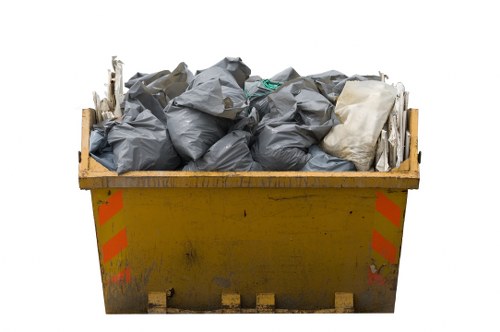
Flat Clearance St Johns Wood: Recycling and Sustainability
Our approach to Flat Clearance St Johns Wood focuses on creating an eco-friendly waste disposal area and a truly sustainable rubbish area for homeowners and landlords. We combine careful on-site sorting, community partnerships and low-carbon transport to reduce environmental impact during every St Johns Wood flat clearance job. By emphasising reuse, repair and responsible recycling we aim to shift the local clearance model from landfill to circular reuse.
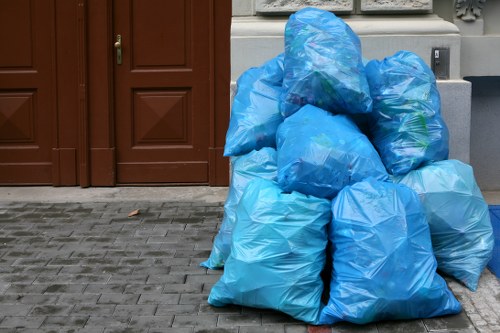 We set a clear recycling percentage target for all clearances: our goal is to divert at least 80% of materials from landfill within three years through reuse, donation and proper material recovery. That target is driven by local borough practices: the City of Westminster and neighbouring North London boroughs separate glass, paper/card, mixed dry recycling, and food waste at source, and we align our sorting streams to feed those municipal systems and authorised transfer stations.
At the heart of our sustainable rubbish area plan is a practical segregation protocol carried out on site. Items are triaged into: reusable furniture, charity-bound goods, recyclable rigid plastics, metals, mixed paper and card, glass by colour where required, and residual waste. We use clear labelling and colour-coded sacks and crates so the clearance team follows the boroughs' waste separation rules and minimises contamination of recycling loads.
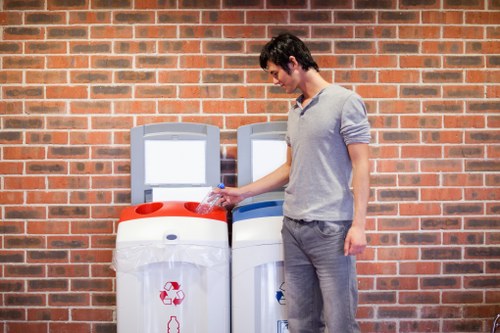 We work with local transfer stations and licensed waste facilities to ensure materials are handled correctly once they leave St Johns Wood. Examples include the City of Westminster's transfer facilities and permitted North London transfer stations that accept segregated streams for onward sorting and processing. Using authorised transfer stations guarantees that council recycling targets are supported and materials reach the right reprocessors.
Partnerships with charities and re-use organisations are central to our circular approach. We maintain active relationships with local and national charities such as Emmaus and the British Heart Foundation, as well as community re-use centres and faith-based initiatives operating in St Johns Wood. These partnerships allow functional furniture and household items to be uplifted quickly and given a second life rather than being disposed of.
Our St Johns Wood flat clearance teams are trained to identify higher-value items and salvageable materials that suit charity collections, community reuse projects or specialist refurbishers. Where items are unsuitable for reuse, we separate components so metal, wood and plastics can be recycled as raw materials. This means fewer items enter the residual stream and more are captured for recycling or recovery.
To reduce transport emissions we operate a growing fleet of low-carbon vans and vehicles. A mix of electric vans and Euro 6 hybrid vehicles is deployed for inner-London routes, keeping urban emissions down. Vehicle scheduling is optimised to minimise miles and the carbon footprint of each flat clearance in St Johns Wood, with priority given to electric replacements as they become available.
We also offer customers the option of a pre-clearance sustainability briefing so residents understand how their items will be treated, which charities can collect certain goods, and how we will make use of local transfer stations. This transparency supports the community's transition to more responsible waste practices and helps households make greener choices during a clear-out.
Operationally, our sustainable rubbish area toolkit includes:
- On-site segregation into reuse, recycle and residual fractions
- Direct handovers to charity partners for reusable items
- Delivery of segregated streams to authorised local transfer stations
- Use of low-carbon vehicles and optimised routing
- Documentation and manifests for larger loads, supporting borough reporting
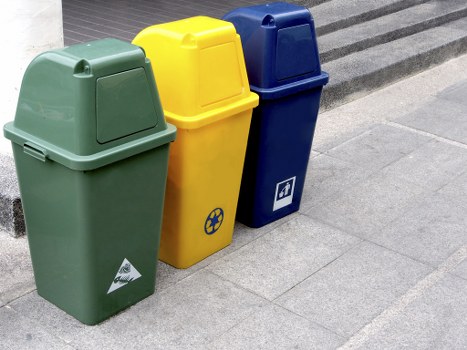 We actively track progress against our recycling percentage target and publish internal reports showing tonnes diverted and carbon saved. These metrics help refine processes and demonstrate how St Johns Wood flat removals can support the wider borough goals for waste separation and reduced landfill. By aligning our sorting scheme with local municipal systems — for example, separate glass and food waste collections — we reduce contamination and increase the recovery rate for recyclables.
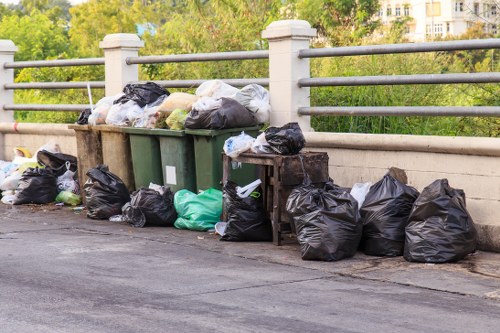 Our long-term vision for flat clearance St Johns Wood is to create a neighbourhood-standard approach: every clearance should maximise reuse, channel durable goods to charities, send recyclable materials to proper reprocessors via transfer stations, and be carried out in low-emission vehicles. This practical, community-focused strategy turns routine clearances into opportunities to build a greener, more circular St Johns Wood.