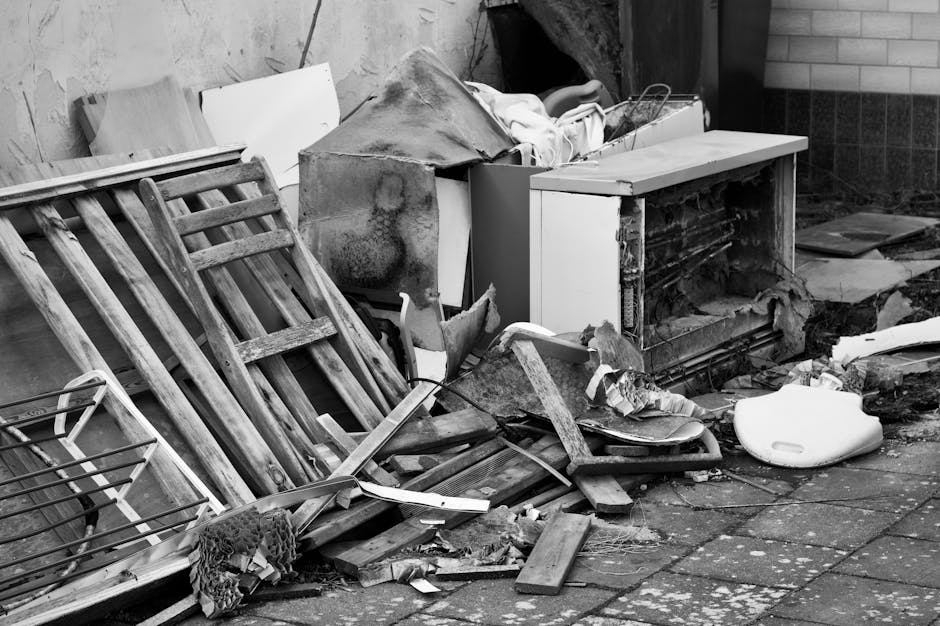
Hidden fees to watch for with St Johns Wood rubbish services
If you are arranging rubbish removal in St Johns Wood, the quote on the screen is rarely the full story. The tricky part is not always the headline price; it is the small print around access, weight, specialist items, waiting time, and disposal. Hidden fees to watch for with St Johns Wood rubbish services can turn a tidy job into an annoying bill if you are not careful. And let's face it, nobody wants that moment when the team has loaded the last bag and suddenly the total has grown.
In this guide, you will learn which charges are commonly added, how to spot them early, what questions to ask before booking, and how to compare providers properly. You will also see where related services such as pricing and quotes, waste removal, and what can go in a skip fit into the picture, so you can make a cleaner, calmer decision. A little caution upfront saves a lot of hassle later.
Expert summary: the best rubbish service is not always the cheapest quote; it is the one that explains exactly what is included, what is excluded, and what might change the price before anything is lifted.
Why Hidden fees to watch for with St Johns Wood rubbish services Matters
Hidden fees matter because rubbish removal often looks simple from the outside. You point at a pile of waste, someone quotes a price, and it all sounds straightforward. But the actual job can change quickly once access, item type, labour, or disposal rules are considered. A basement flat with a narrow stairwell is not the same as a ground-floor collection with a clear front drive. Not even close.
In St Johns Wood, that matters even more because homes, flats, mews properties, and managed buildings can have different access conditions. A van may not park directly outside. A lift may be small. A concierge may require timed arrivals. Those details can affect cost if they are not addressed in advance. The result is usually one of three things: the quote changes, the job takes longer, or you feel you have been caught out. None of those are ideal.
There is also a trust issue. Transparent pricing is a good sign that the provider understands its own process. Vague pricing can be a warning that the company is relying on add-ons. That does not automatically mean the business is bad, to be fair, but it does mean you should ask sharper questions. A clear service should be able to explain where the price comes from without making you decode it like a mystery novel.
How Hidden fees to watch for with St Johns Wood rubbish services Works
Most rubbish services quote in one of two ways: a fixed estimate based on the job details, or a load-based price that depends on how much space your waste takes in the vehicle. Fees usually appear when the actual collection differs from the description used for the quote. That difference can be genuine, accidental, or, in the worst cases, deliberately fuzzy.
Here are the most common triggers for extra cost:
- Additional volume: the waste is larger than expected, so a bigger vehicle or second load is needed.
- Heavy materials: rubble, soil, tiles, or dense builders' waste can cost more because of weight and disposal handling.
- Restricted access: stairs, narrow hallways, long carries, parking issues, or no lift may increase labour time.
- Special items: fridges, mattresses, sofas, and certain appliances can involve separate handling or processing.
- Hazardous materials: anything requiring specialist disposal may not be covered by a standard quote.
- Waiting time: if access is delayed, some providers charge for idle time.
- Sort-and-separate work: if the waste is mixed and must be sorted on site, labour can increase.
Sometimes the issue is not a hidden fee at all, but a quote that was never properly scoped. A pile of mixed household junk is easy enough to estimate. A loft clear-out with broken furniture, old boxes, and one awkward appliance tucked in the corner? That's a different story. If you have ever stared at a half-empty room at 8am and thought, "actually, there is more here than I remembered", you already understand why exact descriptions matter.
It helps to think of pricing as a conversation. The more precise the questions, the less room there is for surprise charges. Good providers normally welcome that. They would rather know the awkward bits before arriving than negotiate at the kerbside.
Key Benefits and Practical Advantages
Getting ahead of hidden charges is not just about saving a few pounds. It improves the whole job from start to finish. The benefits are practical, and honestly, a bit underrated.
- Cleaner budgeting: you can plan the real cost rather than guessing from the headline figure.
- Less stress on the day: nobody enjoys price changes when the waste is already outside.
- Faster collections: a properly scoped job usually runs more smoothly.
- Better comparison: you can compare like for like instead of apples with oranges.
- Reduced dispute risk: written clarity cuts down on misunderstandings later.
- More suitable service choice: you can match the job to the right type of clearance, whether it is flat clearance, house clearance, or office clearance.
There is also a practical quality-of-life benefit. If you have ever had tradespeople or removal teams in your space, you know how quickly a day can disappear. Clear pricing keeps everyone focused on the actual job. That makes the process feel more professional and less like haggling in a hurry.
Who This Is For and When It Makes Sense
This matters for just about anyone arranging rubbish services in St Johns Wood, but some people need to be extra careful.
- Flat owners and renters: access, lifts, and stairs can affect labour charges.
- Landlords and letting agents: end-of-tenancy clearances often involve mixed waste and tight turnarounds.
- Homeowners: garage, loft, or garden clearances can look smaller than they are at first glance.
- Businesses: office clear-outs may include confidential waste, furniture, or IT equipment.
- DIY and renovation customers: builders' waste can be heavier and more expensive to dispose of properly.
It also makes sense if you are comparing a man-and-van style collection with a more structured waste removal service. Some jobs are simple. Others are full of little tripwires. A cracked wardrobe at the top of a narrow stairwell, for example, may need two people, more time, and careful handling. That is exactly the sort of detail that changes a quote.
If you are booking for the first time, or if you have had a poor experience elsewhere, treat pricing as part of the service quality. That mindset alone can save you a headache.
Step-by-Step Guidance
Here is a simple way to reduce the chance of surprise charges before you book.
- List every item clearly. Include bulky pieces, broken items, and anything unusual. Do not just say "some rubbish". That phrase is almost guaranteed to cause trouble.
- Note the access conditions. Mention stairs, narrow entrances, parking limits, concierge rules, or distance from the property to the vehicle.
- Separate special waste early. Keep aside anything that may need specialist handling, such as appliances or potentially hazardous items.
- Ask what the quote includes. Labour, loading, disposal, congestion, parking, and VAT can all matter depending on the provider.
- Ask what may increase the price. This is the key step. A good company should explain the likely extras before arrival.
- Request confirmation in writing. A short email or booking note is often enough to reduce disputes later.
- Prepare the waste before collection. If items are already grouped and accessible, the crew can work efficiently and you reduce the risk of time-based extras.
A quick real-world example: if you are clearing a one-bedroom flat and there is a mattress, a broken desk, three bags of mixed household waste, and an old fridge, the fridge may need separate handling. The mattress might too. That is exactly the sort of thing to clarify before anyone arrives at the door with a van and a clipboard.
Expert Tips for Better Results
These are the small things that make a noticeable difference.
- Use photos. A few clear pictures often give a much better estimate than a text description.
- Measure bulky items. Especially wardrobes, sofas, large appliances, and built-in pieces.
- Be specific about the job type. A furniture clearance is not the same as a general waste removal, and a garden clearance is rarely just "a few bits".
- Ask about minimum charges. Small jobs can still have a base fee, even if the load is light.
- Check whether labour is included. Some quotes cover loading, while others assume items are already curbside.
- Clarify payment method and timing. It is better to understand how payment works before the team turns up.
One more thing: if a quote sounds unusually cheap, pause for a second. Not always a red flag, but often a sign that something has been left out. The cheapest figure is not very useful if it grows by the end of the morning. We have all seen that film before.
For more general transparency around fees and service breakdowns, it is sensible to review payment and security information and the provider's terms and conditions before confirming anything.
Common Mistakes to Avoid
Most hidden-fee problems start with a small assumption. Usually, one of these:
- Assuming all waste is priced the same. It is not. Weight, type, and disposal route all matter.
- Leaving special items out of the description. One fridge, one mattress, or a bag of rubble can change the job.
- Ignoring access issues. A third-floor walk-up is not a minor detail. It affects time and effort.
- Booking by headline price alone. That is the classic trap.
- Not checking whether the company is insured. In tight hallways or shared buildings, that matters more than people think.
- Not reading the quote properly. A five-minute read can save a five-minute argument later.
There is also the "I'll explain it on the day" mistake. That sounds flexible, but in practice it can mean you are negotiating from a weak position once the waste is already piled up. Better to get clarity first. Simple, not fancy.
Tools, Resources and Recommendations
You do not need special software to avoid hidden fees, but a few simple tools help a lot.
- Your phone camera: take photos of the waste from different angles.
- A rough room list: note what is in the loft, garage, spare room, or basement.
- A tape measure: useful for bulky furniture and awkward appliances.
- Notes app or checklist: keep access details, parking restrictions, and building rules in one place.
- Booking page or quote form: use the provider's formal quoting route where possible, such as book online when you are ready to request a service.
If you are comparing services, look at how clearly the company explains different job types. A provider that offers pages for furniture clearance, garage clearance, loft clearance, and garden clearance is often signalling that it understands different waste streams and access patterns. That does not guarantee a perfect quote, of course, but it is a decent sign.
Law, Compliance, Standards, or Best Practice
With rubbish services, the legal and compliance side is worth respecting. You do not need to become an expert, but you should know the basics. Waste should be handled and disposed of responsibly, and duty of care expectations apply to anyone arranging waste transfer. In plain English, that means you should be careful about who takes your rubbish, where it goes, and whether the service is operating properly.
Best practice is simple:
- use a provider that explains what happens to your waste;
- avoid handing over waste to anyone who cannot clearly describe their process;
- check that hazardous or specialist items are handled through the right route;
- keep a record of the service details and quote;
- make sure the job description is accurate.
If your waste includes items that may be classed as hazardous, such as certain chemicals or materials that need special handling, do not assume a standard clearance is fine. You should ask directly about specialist disposal. For appliance-heavy jobs, the provider's fridge and appliance removal information can be particularly useful. For anything sensitive or business-related, confidential shredding may be more appropriate than general waste collection.
Insurance also matters. If items need to be removed from inside a property, or through common parts in a managed building, it is sensible to check the company's insurance and safety position and read the health and safety policy if it is available. A responsible operator should be happy to discuss this in plain English. No jargon ballet required.
Options, Methods, or Comparison Table
Different collection methods suit different jobs. The table below gives a practical comparison, especially if you are deciding between a more flexible rubbish service and a skip-based option.
| Method | Best for | Possible hidden-fee risks | What to check first |
|---|---|---|---|
| Man-and-van rubbish removal | Quick household clearances, mixed items, awkward access | Extra labour, waiting time, heavy items, stair carry charges | What is included in loading and disposal |
| Skip hire | Longer DIY jobs, ongoing renovation waste, site use | Permit costs, overfilling, prohibited items, weight restrictions | What can go in a skip and whether a permit is needed |
| Specialist item removal | Appliances, mattresses, sofas, or sensitive waste | Separate item charges, handling fees, specialist disposal | Whether the item is treated as standard or specialist waste |
For many residents, the choice comes down to convenience. If you need a fast, full-service collection from inside a flat, a rubbish removal service may be easier. If you have a bigger project and can fill waste steadily over time, a skip may be more practical. The cheapest option is not always the cleanest fit.
Case Study or Real-World Example
Here is a realistic example from the kind of job that causes pricing confusion.
A resident in a St Johns Wood flat booked what they believed was a standard clearance for a few bags, a broken chest of drawers, and an old sofa. On arrival, the team found the sofa was on the fourth floor, there was no lift access large enough for the item, and a hallway turn made the carry awkward. There was also an old fridge tucked in the kitchen that had not been mentioned during booking.
The original estimate was not wildly wrong, but it did not include the extra labour or the appliance handling. The revised cost was higher, and the customer was frustrated because they had genuinely thought the job was straightforward. The real issue was not the provider being clever; it was the incomplete description.
What could have prevented it? Three things:
- photos of every item, including the fridge;
- clear mention of the floor level and lift size;
- a direct question about appliance handling before confirming the booking.
That is the pattern, really. Most fee surprises are born from a small missing detail, not a dramatic failure.
Practical Checklist
Use this before you book or confirm a rubbish collection.
- Have I listed every item that needs removing?
- Have I included awkward or bulky pieces?
- Have I mentioned stairs, lifts, parking, or long carries?
- Have I separated any special waste or appliances?
- Have I asked whether labour is included?
- Have I checked whether weight or volume changes the price?
- Have I confirmed payment terms in writing?
- Have I asked what might trigger extra charges on the day?
- Have I reviewed the provider's relevant service pages, such as mattress and sofa disposal or hazardous waste disposal, if my items need them?
- Am I comfortable that the quote matches the actual job?
If the answer to any of those is "not yet", take another five minutes. It is worth it. Honestly, it is.
Conclusion
Hidden fees to watch for with St Johns Wood rubbish services are usually not mysterious once you know where to look. They tend to sit in the same places: access, weight, item type, labour time, and disposal complexity. The safest approach is to describe the job precisely, ask direct questions, and compare quotes on the same basis.
That way, you are not just looking for the lowest figure. You are looking for the clearest, fairest, most workable service for your home, flat, office, or renovation project. And that is a much better way to book, especially in a busy area where space, access, and time can all be a bit tight.
Get a free quote today and see how much you can save.
If you want to explore the company behind the service, you can also review about us and the broader recycling and sustainability approach before making a decision. A well-explained service always feels calmer. That matters more than people admit.
Frequently Asked Questions
What hidden fees are most common with rubbish removal in St Johns Wood?
The most common extra charges tend to be for additional volume, heavy waste, awkward access, specialist items, and waiting time. If a job involves stairs, narrow hallways, or items like fridges and mattresses, ask about those specifically.
How can I tell if a rubbish quote is too low to be real?
If a quote is much lower than others and the provider is vague about what is included, that is usually a sign to slow down. A realistic quote should explain labour, disposal, and any likely extras in plain language.
Should I send photos before booking a collection?
Yes, if possible. Photos are one of the easiest ways to reduce pricing errors because they show the volume, type of waste, and any awkward items or access problems. A few good photos can save a lot of back-and-forth.
Do stairs and no-lift access increase rubbish removal costs?
They often can, because they affect labour time and effort. A fourth-floor flat with no lift is a very different job from a ground-floor collection. Mention access early so it can be priced properly.
Are appliances and mattresses usually included in standard rubbish quotes?
Not always. Many providers treat appliances, mattresses, and sofas as separate categories because they may require specific handling or disposal routes. Always ask before booking, especially if the item is bulky or electrical.
Can I avoid hidden fees by choosing skip hire instead?
Not automatically. Skip hire has its own possible extras, such as permits, overfilling, and prohibited waste. It can be the right choice for some jobs, but it still needs careful checking.
What should be included in a proper rubbish removal quote?
A proper quote should clearly explain what waste is covered, whether loading is included, how payment works, and what might change the price. If anything is unclear, ask for it in writing.
Is hazardous waste more expensive to remove?
Usually, yes, because it often needs specialist handling and disposal. If you suspect your waste may be hazardous, do not mix it with standard rubbish. Ask for a specialist disposal option instead.
How do I compare rubbish services fairly?
Compare like for like. Use the same waste description, same access details, and same list of items for each quote. Otherwise, one quote may look cheaper simply because it assumes less work.
What if the crew finds extra waste on the day?
That depends on the provider, but the price may change if the extra waste increases the load or requires more labour. This is why it helps to walk through the property beforehand and mention anything even slightly uncertain.
Are there any services that help with specific items like fridges or sofas?
Yes. Services such as fridge and appliance removal and mattress and sofa disposal are useful when standard rubbish removal may not be the right fit. Specific item pages are often a good sign that the provider knows how to handle different waste types properly.
How can I reduce the chance of surprise charges on moving day?
Be precise in your booking details, share photos, mention access issues, and ask what could increase the cost. That combination usually catches the most common surprises before they happen. A little care up front really does go a long way.